ARTNEWS-New York
October,1998
《ARTnews》紐約藝評
— Gerard Haggerty 1998年10月
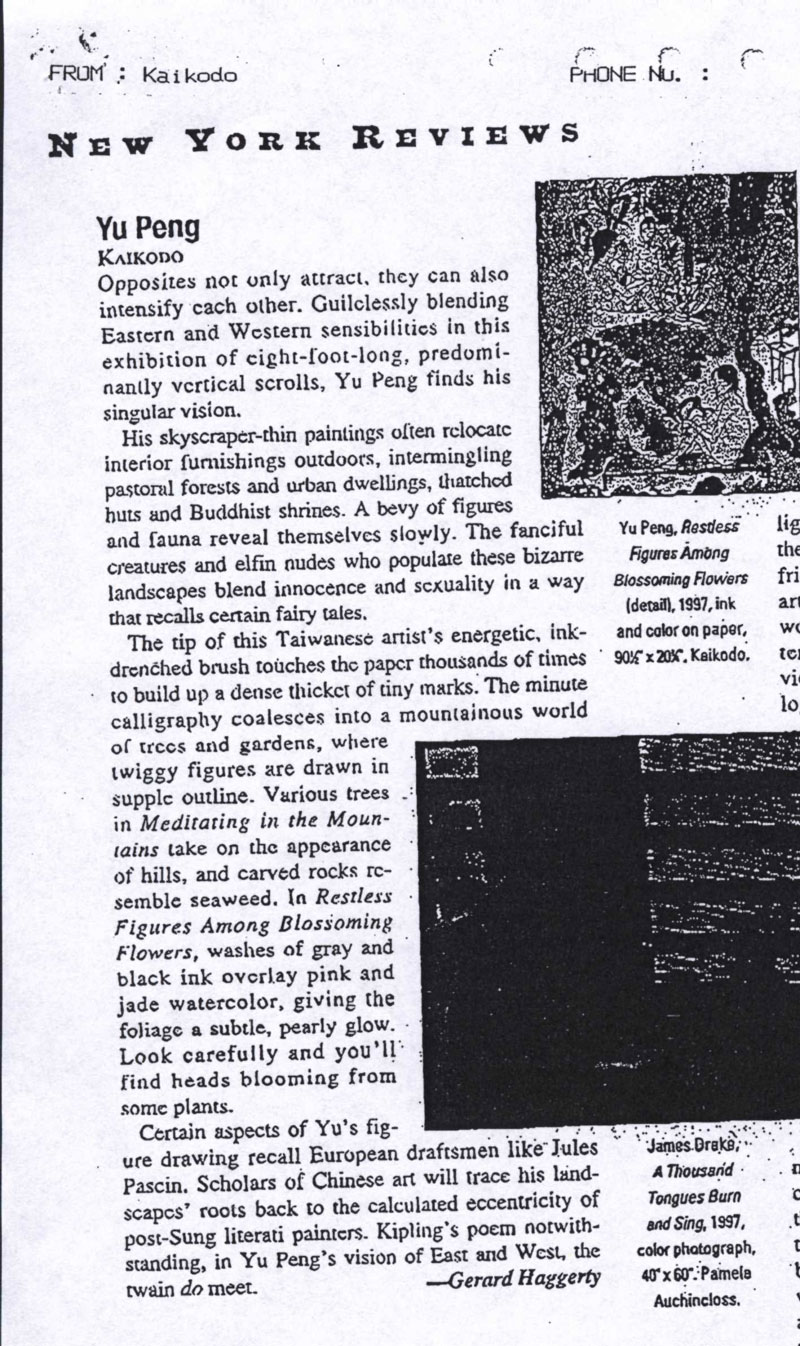
對立之物不僅彼此吸引,也可能相互激發、彼此增強。于彭在這批以八呎長、以直幅為主的卷軸作品中,毫不造作地融合東方與西方的感性與美學,從而確立了其獨樹一幟的藝術視野。
他那些如摩天大樓般修長的畫作,經常將室內陳設移置於戶外,使田園森林與都市居所、茅屋與修道所相互交融。畫中的人物與生靈成群出現,卻往往需要觀者緩緩探索才會逐漸顯現。棲息於這些奇異景觀中的幻想生物與精靈般的裸體人物,以一種令人聯想到童話世界的方式,將純真與情慾融合於一體。
這位臺灣藝術家充滿活力、飽含墨韻的筆尖,在紙面上落下成千上萬次觸點,層層堆積出濃密如林的細微筆痕。這些細若微塵的筆墨線條逐漸凝聚成一個由山巒、樹木與園林構成的世界,而纖細的人物則以流暢而優雅的輪廓勾勒而成。在《蓮生奇誌》(Meditating in the Mountains)中,各式樹木彷彿化作起伏山丘;雕琢奇石則宛如海藻般舒展生長。在《花開人不靜》(Restless Figures Among Blossoming Flowers)中,灰黑色墨韻層層覆於淡紅與翠玉色彩之上,使枝葉呈現出細膩而如珍珠般的柔和光澤。仔細觀看,甚至會發現幾個小腦袋的形象從一些植物間綻放出來。
于彭的人物描繪,某些方面令人聯想到歐洲素描大師 Jules Pascin(朱勒・帕斯金)。而熟悉中國藝術史的觀者,則可從其山水之中追溯出宋代以後(指元代明代)文人畫家刻意經營的奇逸風格。儘管吉卜林(Kipling)曾寫下「東方是東方,西方是西方,兩者永不相遇」的名句,但在于彭的藝術視野之中,東西方確實相遇了。
Opposites not only attract, they can also intensify each other.Guilelessly blending Eastern and Western sensibilities in this exhibition of eight-foot-long, predominantly vertical scrolls, Yu Peng finds his singular vision.
His skyscraper-thin paintings often relocate interior furnishings outdoors, intermingling pastoral forests and urban dwellings, thatched huts and Buddhist shrines. A bevy of figures and fauna reveal themselves slowly. The fanciful creatures and elfin nudes who populate these bizarre landscapes blend innocence and sexuality in a way that recalls certain fairy tales.
The tip of this Taiwanese artist’s energetic, ink-drenched brush touches the paper thousands of times to build up a dense thicker of tiny marks. The minute calligraphy coalesces into a mountainous world of trees and gardens, where twiggy figures are drawn in supple outline. Various trees in Meditating in the Mountains take on the appearance of hills, and carved rocks resemble seaweed. In Restless Figures Among Blossoming Flowers, washes of gray and black ink overlay pink and jade watercolor, giving the foliage a subtle, pearly glow. Look carefully and you’ll find heads blooming from some plants.
Certain aspects of Yu’s figure drawing recall European draftsmen like Jules Pascin. Scholars of Chinese art will trace his landscape’s roots back to the calculated eccentricity of post-Sung literati painters. Kipling’s poem notwithstanding, in Yu Peng’s vision of East and West, the twain do meet.
——By Gerard Haggerty,ARTNEWS-New York Reviews Oct.1998