Art in America
December,1998
《Art in America》
— Robert Kushner,1998.12
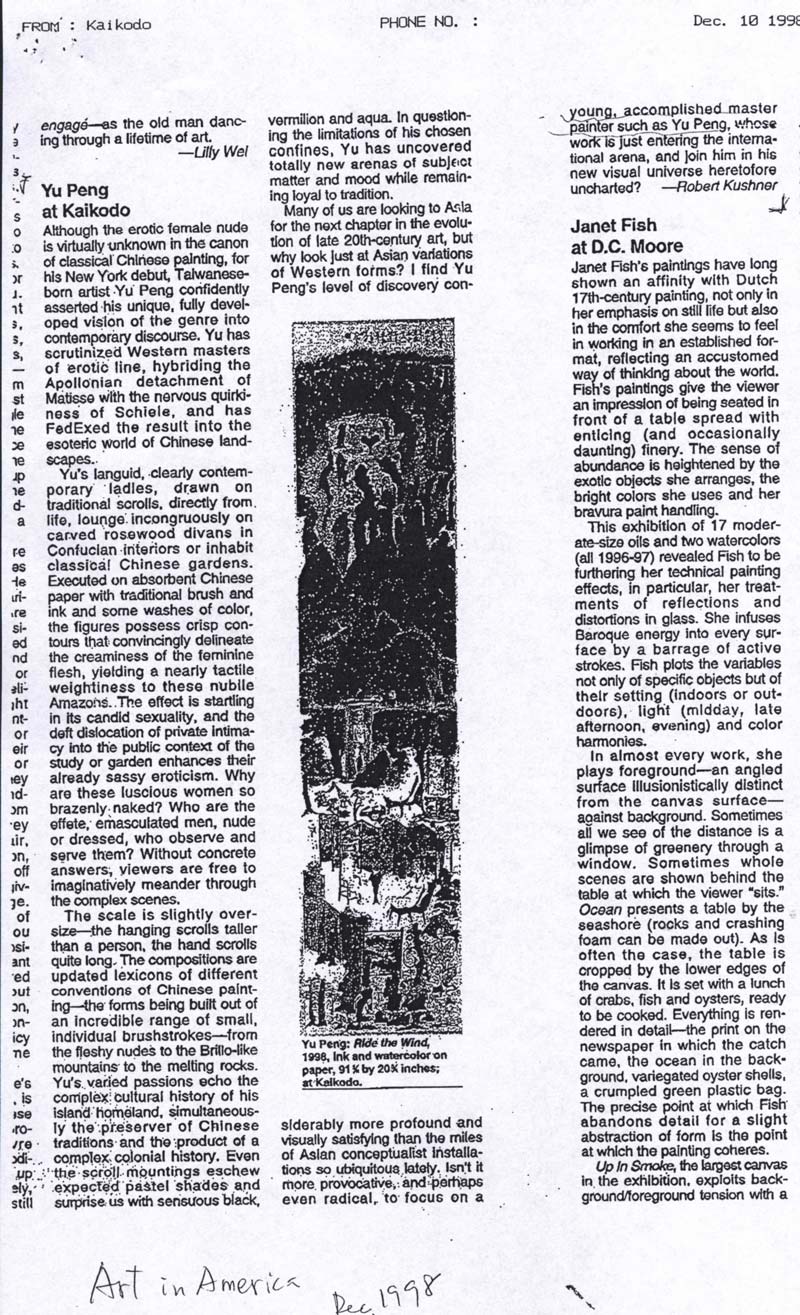
儘管表現欲望的女性裸體幾乎完全不存在於中國古典繪畫的正典之中,臺灣出生的藝術家于彭卻在其紐約首度登場之際,充滿自信地將自己獨特且成熟完整的藝術視野帶入當代藝術論述。于彭細緻研讀西方人體藝術的大師筆法,將馬諦斯(Matisse)近乎阿波羅式的冷靜疏離,與席勒(Schiele)神經質般的奇異扭曲相融合,並彷彿以快遞般迅捷地,將這樣的成果送入中國山水那幽微深奧的世界。
于彭筆下那些慵懶的、顯然是直接對景寫生當代的女性,繪於傳統卷軸之上;她們或不協調地斜倚在士人雅齋中的雕花紅木臥榻上,或棲居於中國古典園林之間。這些作品以吸墨性極強的中國紙、傳統筆墨,以及些許設色完成;人物輪廓俐落鮮明,極具說服力地描繪出女體凝脂感,使這些豐盈而高大的女性形象幾乎具有可觸及的重量感。其坦率直白的性感效果令人震撼,而藝術家巧妙地將私密親暱之感移置於書房或園林這類公共文化空間之中,更進一步強化了她們原已鮮明而帶挑釁意味的情色魅力。 這些豐美誘人的女性,為何如此毫不遮掩地裸露?那些看來頹唐無力、似乎被去勢般的男性——或裸或衣——究竟是誰?他們只是凝視者,還是侍奉者?評論並未給出明確答案,因此觀者得以自由穿行於這層層複雜的意義迷宮之中,展開自己的想像。
作品尺度略為超越常規——掛軸高於人的身形,手卷則極為綿長。其構圖可視為對中國繪畫各種傳統慣例的一套當代更新語彙;畫面形式由令人驚嘆的無數細小而獨立的筆觸構築而成——從豐潤的裸體人物,到充滿細密岩石紋理的山體,再到動人的奇石。于彭多重而豐富的藝術激情,也呼應著其島嶼故土多重的文化歷史:既是中國傳統的保存者,同時也是複雜殖民歷史交織下的產物。甚至連卷軸裝裱也刻意避開預期中的柔和粉彩色調,而改以感性的黑色、朱紅色、水藍水綠等所帶來令人驚異的美感。于彭在質疑自己所選傳統框架之限制的同時,開拓出全新的題材領域與情感氛圍,卻依然對傳統保持忠誠。
許多人正將目光投向亞洲,期待它成為二十世紀末藝術演進的下一篇章;但我們為何只關注那些西方藝術形式的亞洲變體?我認為,于彭所展現的探索層次,遠比近來隨處可見的大量亞洲觀念藝術裝置作品更為深刻,也在視覺上更令人滿足。難道將注意力放在像于彭這樣一位年輕而成就斐然的大師級畫家身上——一位其作品正初次進入國際舞台的藝術家——並與他一同進入這個前所未被描繪過的全新視覺宇宙,不是更具挑釁性,甚至更為激進嗎?
Although the erotic female nude is virtually unknown in the canon of classical Chinese painting, for his New York debut, Taiwanese born artist Yu Peng confidently asserted his unique, fully developed vision of the genre into contemporary discourse. Yu has scrutinized Western masters of erotic line, hybriding the Apollonian detachment of Matisse with the nervous quirkiness of Schiele, and has FedExed the result into the esoteric world of Chinese landscapes.
Yu’s languid, clearly contemporary ladies, drawn on traditional scrolls, directly from life, lounge incongruously on carved rosewood divans in Confucian interiors or inhabit classical Chinese gardens. Executed on absorbent Chinese paper with traditional brush and ink and some washes of color, the figures possess crisp contours that convincingly delineate the creaminess of the feminine flesh, yielding a nearly tactile weightiness to these nublle Amazons. The effect is startling in its candid sexuality, and the deft dislocation of private intimacy into the public context of the study or garden enhances their already sassy eroticism. Why are these luscious women so brazenly naked? Who are the effete, emasculated men, nude or dressed, who observe and serve them? Without concrete answers, viewers are free to imaginatively meander through the complex sense.
The scale is slightly oversize—the hanging scrolls taller than a person, the hand scrolls quite long. The compositions are updated lexicons of different conventions of Chinese painting—the forms being built out of an incredible range of small, individual brushstrokes—from the fleshy nudes to the Brillo-like mountains to the melting rocks. Yu’s varied passions echo the complex cultural history of his island homeland, simultaneously the preserver of Chinese traditions and the product of a complex colonial history. Even the scroll mountings eschew expected pastel shades and surprise us with sensuous black, vermillion and aqua. In questioning the limitations of his chosen confines, Yu has uncovered totally new arenas of subject matter and mood while remaining loyal to tradition.
Many of us are looking to Asia for the next chapter in the evolution of late 20th-century art, but why look just at Asian variations of Western forms? I find Yu Peng’s level of discovery considerably more profound and visually satisfying than the miles of Asian conceptualist installations so ubiquitous lately. Isn’t it more provocative, and perhaps even radical, to focus on a young, accomplished master painter such as Yu Peng, whose work is just entering the international area, and join him in his new visual universe heretofore uncharted ?
——By Robert Kushner,Art in America,Dec.1998